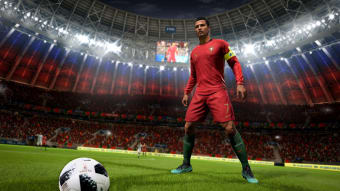
Visually, FIFA 18 builds on its Frostbite engine foundation, delivering detailed player models, improved lighting, and stadium atmospheres that make matches feel closer to broadcast football. The interface remains familiar, guiding players through modes like Career, Ultimate Team, and The Journey with ease.
Movement and positioning take spotlight
FIFA 18 places emphasis on movement both on and off the ball. Player animations feel more natural, with improved dribbling and first-touch control that make possession more dynamic. This results in a real player movement system where players react based on their attributes and positioning rather than scripted outcomes. Passing sequences feel smoother, encouraging players to build attacks instead of forcing direct plays.
This game also expands its content through modes like The Journey, which continues Alex Hunter’s story with a stronger focus on character progression and narrative choices. Career Mode offers team management and long-term development, while Ultimate Team provides a competitive online experience centered around squad building. This variety creates a multi-mode football experience that caters to different playstyles. At the same time, progression in some modes can feel time-intensive.
The visual and audio presentation supports this shift in gameplay. Player likenesses are more detailed, and stadium environments feel alive with crowd reactions that respond to match events. Commentary adds context without overpowering the gameplay, while crowd chants and reactions build tension during key moments. The ball physics contribute to the realism, making shots, passes, and deflections feel more grounded. However, its slower pace may not be for everyone.
Frostbite improvements and technical upgrades
After release, FIFA 18 benefited from ongoing tuning to its Frostbite engine implementation, particularly in lighting stability, texture clarity, and animation blending. These refinements helped reduce visual inconsistencies during fast transitions and improved overall match smoothness on supported platforms. Matchday presentation became more consistent over time, with fewer frame drops in crowded stadium scenes and better crowd rendering under dynamic lighting conditions. These adjustments reinforced the game’s broadcast-style presentation without altering its core gameplay identity.
Ultimate Team and live content
Ultimate Team in FIFA 18 continued evolving beyond launch through regular live content updates, including Squad Building Challenges (SBCs), themed promotions, and time-limited events tied to real-world football calendars. These additions kept the mode active long after release, encouraging players to continuously rebuild squads and engage with evolving objectives. Dynamic player items and chemistry adjustments added more strategic depth to team building, making squad management more responsive to real-world performances and events.
Squad battles and offline progression
One of the most notable additions to FIFA 18’s ecosystem was Squad Battles, a mode that allowed players to compete against AI-controlled teams built by real users. This provided a structured offline progression path within Ultimate Team, offering weekly rankings and rewards. It gave solo players a competitive alternative to online matches while still preserving the reward-driven structure of FUT. This helped balance accessibility for both casual and competitive audiences.
AI behavior and tactical adjustments
Post-launch updates also focused on improving AI positioning and tactical awareness, particularly in defensive transitions and goalkeeper reactions. Defenders became more responsive to through balls and overlapping runs, while attackers showed improved decision-making in build-up phases. These refinements helped reduce predictable patterns in gameplay, encouraging more varied attacking strategies and more realistic defensive organization. The result was a more grounded football simulation experience over time.
Player customization systems
FIFA 18 expanded customization indirectly through ongoing FUT content and career progression tuning. Players could fine-tune squads with consumables, training items, and chemistry styles that influenced individual performance traits. This layer of customization gave managers more control over how players behaved on the pitch, beyond just raw ratings. It also encouraged experimentation with hybrid squads and unconventional formations, adding replay value to long-term team building.
Transition in the franchise’s direction
Looking back, FIFA 18 represents a transitional phase where the series fully committed to a slower, more positional football philosophy while still retaining its arcade-friendly roots. It bridges the gap between older fast-paced FIFA titles and the more tactical, animation-driven entries that followed. While not as feature-heavy as later versions, it laid important groundwork for modern movement systems, presentation standards, and live-service integration.
A more deliberate FIFA entry
FIFA 18 succeeds by making football feel more controlled, thoughtful, and grounded than a purely speed-driven sports game. Its improved movement, smoother passing, and stronger sense of matchday atmosphere give the action more realism, while modes like The Journey and Ultimate Team add lasting variety. However, some progression systems can feel time-consuming. Even so, it remains a polished and satisfying entry for players who enjoy a slower, smarter style of football.